AI in Healthcare 2026: How Machine Learning is Revolutionizing Medicine
Discover how AI is transforming healthcare in 2026. From diagnosis to drug discovery, explore the top medical AI companies and real-world applications saving lives today.

In this article
AI in Healthcare 2026: How Machine Learning is Revolutionizing Medicine
Artificial intelligence is no longer a futuristic concept in healthcare—it's saving lives today. From detecting cancer earlier than ever before to accelerating drug discovery from years to months, AI in healthcare has become one of the most transformative forces in modern medicine.
In 2026, the global healthcare AI market is projected to exceed $45 billion, with adoption rates skyrocketing across hospitals, clinics, and pharmaceutical companies worldwide.
🔑 Key Takeaways
- AI diagnostics now detect diseases with 94%+ accuracy, often surpassing human doctors
- Drug discovery time has been reduced from 10+ years to under 2 years using ML
- Top medical AI companies like Tempus, PathAI, and Recursion are leading the revolution
- $45+ billion market size projected for healthcare AI in 2026
- Every major hospital in the US now uses at least one AI-powered diagnostic tool
📌What is AI in Healthcare?
AI in healthcare refers to the use of artificial intelligence technologies—including machine learning, deep learning, natural language processing, and computer vision—to analyze medical data, assist in diagnosis, personalize treatments, and streamline healthcare operations. Unlike traditional software, AI systems can learn from data and improve their accuracy over time.
📖How Machine Learning is Changing Medicine: 7 Breakthrough Applications
1. AI-Powered Medical Imaging and Diagnostics
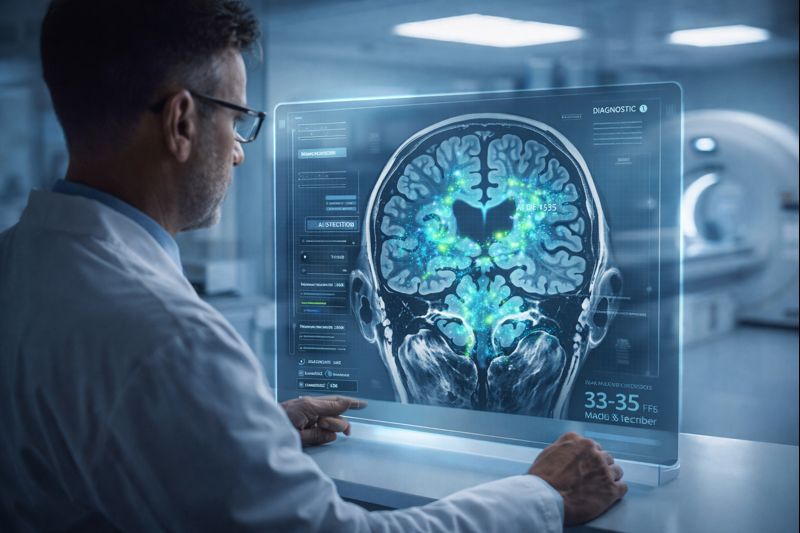
Machine learning algorithms can now analyze X-rays, MRIs, CT scans, and pathology slides with remarkable accuracy. In many cases, AI systems outperform human radiologists.
| Application | AI Accuracy | Human Accuracy | Impact |
|---|---|---|---|
| Lung cancer detection | 94.4% | 88.0% | Earlier detection saves lives |
| Diabetic retinopathy | 97.5% | 93.4% | Prevents blindness |
| Skin cancer classification | 95.0% | 87.0% | Faster referrals |
| Breast cancer screening | 94.5% | 88.9% | Reduces false positives |
✅ Real-World Example: Google Health
Google's AI system for detecting breast cancer reduced false negatives by 9.4% and false positives by 5.7% compared to human radiologists. This technology is now deployed in NHS hospitals across the UK.
2. Drug Discovery and Development
Traditional drug development takes 10-15 years and costs over $2.6 billion on average. AI is compressing this timeline dramatically.
How AI accelerates drug discovery:
- Target identification: ML analyzes genomic data to find disease targets
- Compound screening: AI predicts which molecules will be effective
- Clinical trial optimization: Algorithms identify ideal patient populations
- Side effect prediction: Models forecast adverse reactions before trials
📊 By the Numbers
- Insilico Medicine developed a drug candidate in 46 days (vs. 4.5 years traditionally)
- AlphaFold predicted structures of 200 million proteins
- AI-discovered drugs in clinical trials: 20+ as of 2026
3. Personalized Treatment Plans
AI enables truly personalized medicine by analyzing a patient's genetics, lifestyle, and medical history to recommend tailored treatments.
Tempus, one of the leading medical AI companies, uses machine learning to analyze clinical and molecular data, helping oncologists choose the most effective cancer treatments for individual patients.
4. Robotic Surgery
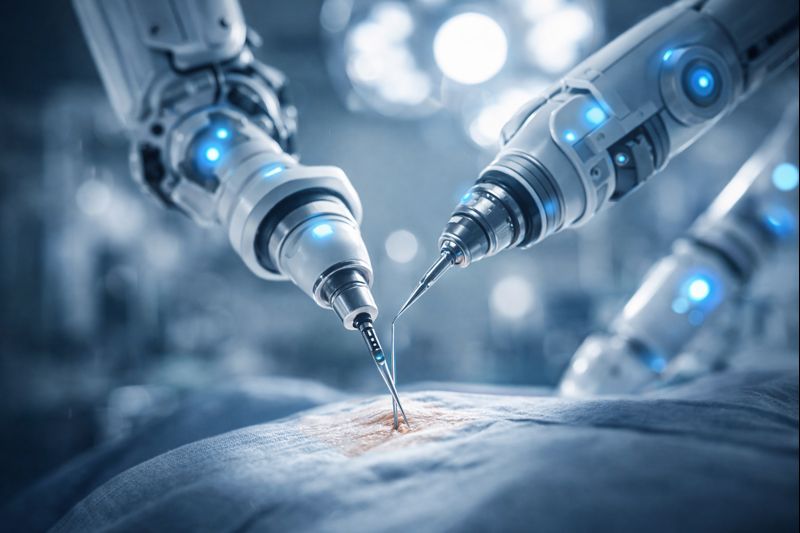
AI-assisted robotic surgery offers:
- Sub-millimeter precision impossible for human hands
- Reduced complications and shorter recovery times
- Real-time guidance using computer vision
- Tremor elimination for delicate procedures
The da Vinci Surgical System, enhanced with AI, has performed over 10 million procedures worldwide.
5. Predictive Analytics and Early Warning Systems
Hospitals now use AI to predict patient deterioration before it happens:
- Sepsis prediction: AI can identify sepsis 6-12 hours before clinical signs appear
- Readmission risk: ML models predict which patients are likely to return within 30 days
- ICU monitoring: Real-time analysis of vital signs catches problems early
6. Natural Language Processing for Medical Records
NLP transforms unstructured clinical notes into actionable insights:
- Automatic coding: Reduces billing errors and administrative burden
- Clinical decision support: Surfaces relevant patient history instantly
- Research acceleration: Enables analysis of millions of records
7. Mental Health and Virtual Health Assistants
AI-powered chatbots and virtual assistants are expanding access to care:
- Woebot: AI therapist providing CBT techniques 24/7
- Ada Health: Symptom checker used by 13 million people
- Babylon Health: AI triage reducing unnecessary ER visits
🏆Top Medical AI Companies Leading the Revolution (2026)
| Company | Specialization | Funding | Key Achievement |
|---|---|---|---|
| Tempus | Precision medicine | $1.3B | Largest clinical + molecular database |
| PathAI | Pathology AI | $400M | FDA-cleared cancer diagnostics |
| Recursion | Drug discovery | $1.1B | 6 AI-discovered drugs in trials |
| Insitro | ML drug development | $734M | Partnered with Gilead, BMS |
| Viz.ai | Stroke detection | $252M | 8-minute faster stroke treatment |
| Butterfly Network | Portable ultrasound | $350M | AI-powered handheld imaging |
| Paige AI | Cancer pathology | $200M | First FDA-approved AI for pathology |
💡 Investment Insight
Healthcare AI startups raised over $15 billion in 2025 alone, making it one of the hottest sectors for venture capital investment.
📊Challenges and Ethical Considerations
While AI in healthcare offers immense promise, significant challenges remain:
Data Privacy and Security
- Medical data is highly sensitive and regulated (HIPAA, GDPR)
- AI models require massive datasets to train effectively
- Federated learning offers solutions by training on decentralized data
Algorithmic Bias
- AI trained on biased data can perpetuate healthcare disparities
- Underrepresentation of minorities in training data is a major concern
- Regulatory frameworks now require bias audits for medical AI
Regulatory Approval
- FDA has approved 600+ AI medical devices as of 2026
- Regulatory pathways are still evolving
- International harmonization remains a challenge
The Human Element
- AI augments, not replaces, human judgment
- Physician oversight remains essential
- Patient trust must be maintained
⚠️ Important Consideration
AI systems should always be used as decision support tools, not autonomous decision-makers. The final medical decision must remain with qualified healthcare professionals.
📌The Future of AI in Healthcare: What's Next?
Emerging Trends (2026-2030)
- Foundation models for medicine – GPT-style models trained specifically on medical literature and patient data
- AI-powered drug repurposing – Finding new uses for existing approved drugs
- Continuous health monitoring – Wearables + AI for real-time health insights
- Autonomous robotic surgery – AI-guided procedures requiring minimal human intervention
- Digital twins – Virtual patient models for treatment simulation
❓FAQs
Is AI replacing doctors?
No, AI is augmenting doctors, not replacing them. AI handles data analysis and pattern recognition, freeing physicians to focus on patient relationships, complex decision-making, and care delivery. The goal is AI + human collaboration.
What are the top medical AI companies in 2026?
Leading medical AI companies include Tempus (precision medicine), PathAI (pathology), Recursion (drug discovery), Viz.ai (stroke detection), and Paige AI (cancer diagnosis). These companies have received billions in funding and secured FDA approvals.
How accurate is AI in medical diagnosis?
AI diagnostic accuracy varies by application, but top systems achieve 94-97% accuracy in tasks like cancer detection, diabetic retinopathy screening, and skin lesion classification—often exceeding human performance.
Is AI in healthcare safe?
FDA-approved AI medical devices undergo rigorous testing for safety and efficacy. However, AI systems are designed to support, not replace, physician judgment. All AI recommendations should be validated by qualified healthcare professionals.
How much does healthcare AI cost?
Costs vary significantly. Enterprise solutions from major medical AI companies can cost $100K-$1M+ annually. However, many AI diagnostic tools are now included in standard healthcare software subscriptions, making them accessible to smaller practices.
⚖️Conclusion: The AI Healthcare Revolution is Here
AI in healthcare isn't coming—it's already here, fundamentally changing how we diagnose disease, discover treatments, and deliver care. From detecting cancer with superhuman accuracy to developing drugs in record time, machine learning is saving lives today.
For healthcare organizations, the question is no longer whether to adopt AI, but how quickly they can integrate these transformative technologies while maintaining safety, privacy, and the human touch that medicine requires.
The future of healthcare is intelligent, personalized, and powered by AI.
AI Fuel Hub Editorial Team
A collective of AI researchers, engineers, and product experts dedicated to testing and reviewing AI tools. Combined 50+ years of experience in artificial intelligence.